
Prepared by: Douri’s Empowering Creative Minds team
Edited by: Jang Kapgen
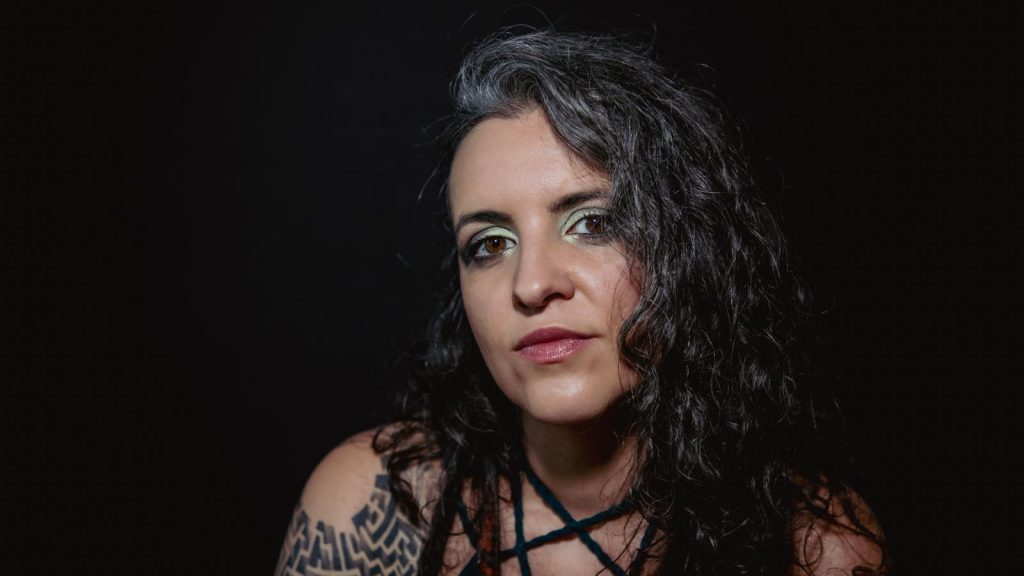
Renowned in the national alternative music scene, Priscila Da Costa is the lead singer of PTOLEMEA, a project that fuses pagan rock, darkfolk and shamanic influences. Next to
PTOLEMEA, the Luxembourgish artist of Portuguese origin is also the vocalist of several other
projects: Judasz & Nahimana, an experimental project exploring the stages of grief; Sinistro, a
Portuguese doom metal band she recently joined as lead vocalist; and Remo Cavallini Band, one
of Luxembourg’s leading blues bands. From 2018 to 2023, Priscila founded and ran The Singing
Experience, a school specialising in vocal coaching for rock and metal singers. Although her
musical projects have become her priority, Priscila continues to share her expertise through
occasional vocal workshops, with a focus on alternative music styles. As part of the Empowering
Creative Minds project, Douri asbl spoke to Da Costa about her inspirations and background –
and explored the open-ended question: “How much do I want people to know about my story?”
Douri: What key milestones have shaped your creative journey from the beginning until now?
Priscila Da Costa: So many things, people, opportunities had an influence on my creative journey.
There is a saying: “Hurt an artist and he/she will create something amazing out of it.”
Like many other artists and musicians, I use my emotionally challenging experiences to create. It is a
tool of expression, transformation and canalisation of the complex emotional spectrum.
Collaborations with other artists shaped my creativity and my know-how as well. All those things are
still fuel for creation, it is a process in constant evolution.
In what ways have your upbringing and personal experiences influenced your artistic direction?
There was always music at home. My father playing guitar, my mother singing Edit Piaff, Jacques
Brel, traditional fado, my sister and my brother singing as well… music was omnipresent and I always
felt this need to sing. Even though I started singing in front of people at 24 years old, I always had to
take time to sing for myself too.
My music is all about personal experiences. I don’t know how to make music, write lyrics in another
way.
How has your creative practice helped you process or move through difficult experiences?
It helped me to transform difficult experiences into something positive and meaningful. “Oh this
happened,” but at least I created this song, and I love it. It gives it all a purpose.
Do you believe that art can express emotions and experiences that are hard to articulate in
words?
Yes, of course! It is very therapeutic.
What are some challenges artists face when expressing personal or traumatic experiences
through their work?
How much do I want people to know about my story? I always write lyrics in a way that leaves a lot
of room for interpretation, and of course I have my own.
Has your approach to expressing painful or difficult experiences changed over time?
At the beginning, I was in a “poor me” state of mind and now I write things with a more hopeful
perspective.
How do you interpret the term “vulnerable artist” in the context of your own experience?
I don’t think it is about “interpretation” of the vulnerable artist, I think it is about “being”: being
yourself, with your past, your history without trying to be someone else, without pretending, just
being authentic.
What does it mean to you when your art resonates with or impacts others? Is this something you
intentionally seek?
I used to intentionally seek to impact others, I don’t anymore. And from the moment I stopped doing
that, my music became better and started resonating with more people.
How do you see the role of institutions — such as theatres, publishers, galleries, or museums in
shaping the landscape of art and creativity?
They can make the life of an artist easier, in supporting projects, getting exposure and, in that aspect,
the artist is more relaxed and at ease to create. There is less struggle.
Do you think being part of these circles affects how artists view the value of their own work or
their place in the field?
Yes, of course. The artist feels that his/her work is recognised and appreciated.
Would you consider choosing to engage with or step away from these institutions a personal
decision?
I think it is a good thing as long as the institution respects the art of the artist. In that case, I would
engage with these institutions.
What types of support do you consider essential for sustaining your artistic practice and
expanding your social engagement?
The subsidies I get from the Ministry of Culture and kultur | lx made it possible for me to develop my
project in a way that I couldn’t have without it. I would have done it anyway, but it would have been a lot harder and the project would be probably different in its development.
Do you have any messages or recommendations you’d like to share with organizations or
institutions that support the arts?
Thank you for your support!! Really!
Do you incorporate practices like meditation or other reflective tools into your creative process?
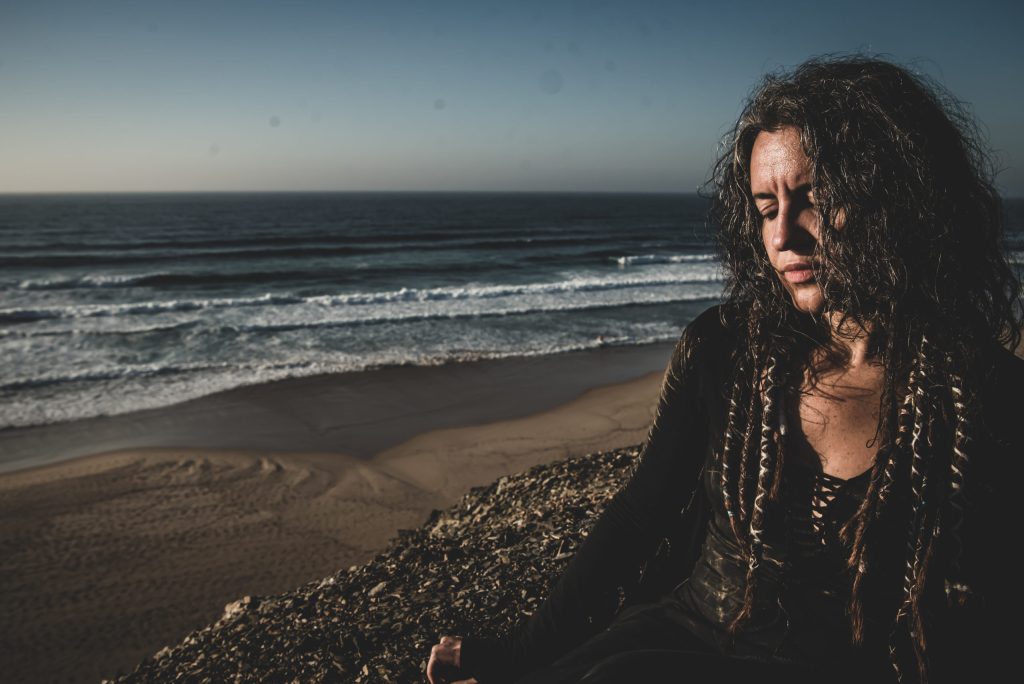
I like to isolate myself to write – in a cabin, in the woods.
How do you view the role of technology and social media in sharing your work and expanding
engagement with the issues you explore?
Nowadays, it is a must! Even though it takes a lot of energy and time, it just is part of the artists’ life.
What are your artistic aspirations for the future? Are there any current or upcoming projects
you’re excited about?
The next album of Ptolemea is coming out November 6th via the Portuguese label “Ragingplanet”
with a release concert at KUFA on November 22nd.
And with my Portuguese band, Sinistro, we are also preparing right now the new album to be released
some time next year.
Thank you Priscila Da Costa for this interview.
Conducted as part of the Empowering Creative Minds project, this interview offers just a
glimpse into Priscila’s world.
You can learn more by visiting her website: www.ptolemea.com
The Empowering Creative Minds project is funded by the EU Creative Europe Programme,
supporting cross-cultural collaboration and artistic growth across Europe
