
An interview with Olga Aleksandrova
Prepared by: Douri’s Empowering Creative Minds team
Edited by: Jang Kapgen
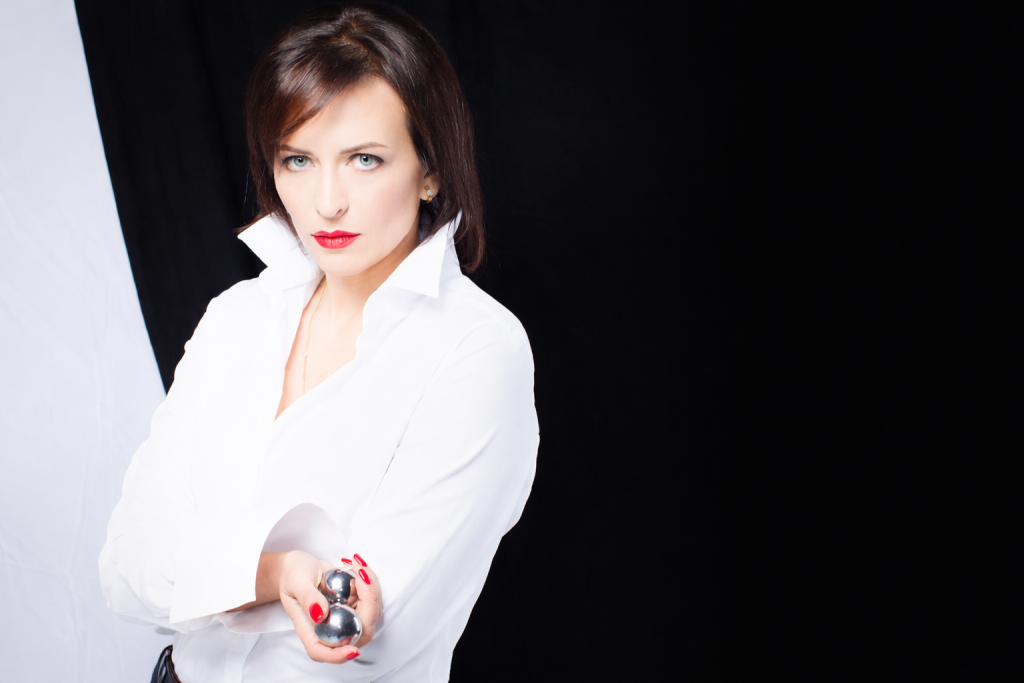
Olga Aleksandrova is a contemporary Ukrainian writer, journalist and columnist. Having published four books, the award-winning author explains, “a good book always needs an idea, sometimes a controversial one, even provocative. But you won’t find ready-made recipes for happiness in my stories”. Akeksandrova left Kyiv for Luxembourg due to the full-scale Russian of Ukraine war. She currently works for the Ministry of Education in Luxembourg, teaching English and Etiquette at EHTL, while supporting the first Ukrainian library in Luxembourg. She is currently finishing her next book.
As part of the Empowering Creative Minds project, Douri asbl spoke to Aleksandrova about her approach of “turning pain into beauty”.
What key milestones have shaped your creative journey from the beginning until now?
My books are always my way to interact with the world. Any experience good or tragic, like war, unfolds on the paper indirectly. The aspiration to defeat aggression results in dystopia, love gives birth to faith, bitterness transforms into a funny story, despair creates survival strategies. I believe in Word – at the beginning, there was the Word. Moreover, I think everything is a story, and everyone is a book. There are stories we tell and remember, some stories we keep in secret, some stories we try to forget. But any story once heard is with us transforming us, curing or injuring us. That is why any storyteller should be very careful.
How has your creative practice helped you process or move through difficult experiences?
We all have dark pages, but writers and artists have the magical skill to transform personal pain into universal beauty. This beauty is recognizable at once by anyone who has encountered pain, who suffered. This beauty doesn’t evoke admiration, but it brings comfort. Now I am writing a book about young people in Luxembourg, those fleeing the war. I believe my experience that resulted into the book can be a support and comfort for those who feel ungrounded. If someone is courageous enough to face challenges, if someone is strong enough to endure the hardships, you will cope. People react differently. Resilience is a gift. But willpower is a magnificent driving force.
Do you believe that art can express emotions and experiences that are hard to articulate in words?
I think there is no necessity to put everything down as a report. The metaphoric nature of art is its blessing. In the process of creation, an art object loses its identity and gets a new one thanks to a viewer.
Musicians are the happiest people in the world, they have a unique language that is coherent. Music influence is subconscious. It is the perfect match, when the musician tells his story and the listener hears his story. Writers at least need to use the language of the reader. Those whose instrument is a word, can be voiceless. I think about translated novels and realize that people who read translated works will never hear our voices, they will hear our stories retold by others. We have this limited ability, and we are in need of assistance. Nothing compares with this problem.
What are some challenges artists face when expressing personal or traumatic experiences through their work?
We are walking on the edge. It is so hard to keep any privacy when you write. Whatever you talk about you talk about yourself. There is no abstract story – any narration is extremely personal, any word testifies, accuses or forgives. If you want to keep your secrets, keep silent. Never write. If you want to share your thoughts and feelings, be ready to be stripped. If my story speaks to your soul, it is your story, in a way. But if it doesn’t, why would you read it? Probably you have experienced that stunning effect, that strange feeling when coming into the room with the canvases, you are stopped by just one of them. Standing motionless speechless, the viewer realizes – it is his personal story.
Has your approach to expressing painful or difficult experiences changed over time? If so, how has that evolution taken shape?
I am not sure that time cures. One can learn how to live with the pain. I would rather say, that I used to be straightforward, and now I am more tolerant. I am not giving recipes, I am not deciding what is right and what is wrong, I am just near here, and my reader is sure – he is not alone.
How do you interpret the term “vulnerable artist” in the context of your own experience?
The artist, like the Happy Prince by Oscar Wilde, stands above the city, who sees the sufferings of people and who is sharing his treasures, who is giving away his golden coverings, leaf by leaf. The firefighter has protective gear, the warrior – body armor. Sometimes this protects. Sometimes. But the artist has nothing. His protection, his weapon, his guide is his love, and a kiss of God.
What role have collaboration and partnerships played in your artistic journey?
Writers are lonely pilgrims. But sometimes we participate in some great projects, so cooperation is inevitable. When I publish books, it is always a team-work, and I try to be a good player. I made several scripts for shorts, and I am learning the art of compromises. But I am lucky to have a team of like-minded people.
In your view, how does the local cultural or societal context influence how you express trauma?
The local cultural and societal context influences me crucially. I write differently, my perspective is new. When I came to Luxembourg, I had four books published and four drafts. I rewrote one of the books over the first summer in Luxembourg.
How do you see the role of institutions – such as theatres, publishers, galleries, or museums in shaping the landscape of art and creativity?
Theatres, museums, and galleries are extremely powerful in shaping the landscape of art. Political influence of these institutions is hard to overestimate, and it has got long-term steady effect. They decide what to support. They decide what topics are banned. They have superpowers governments will never get, as they do not report, they choose. Anyone can easily make a personal list of mind-blowing things that have changed him deeply. The Rart of the Medusa by Theodore Gericaut, For Whom the Bell Tolls by Ernest Hemingway, the Presence of Memory by Salvador Dali, The Wide Sargasso Sea by Jean Rhys, Black Square by Kazimir Malevich, 1984 by George Orwell, The Son of Man by Rene Magritte… influential works of art do change us – so they change the world. These changes are subtle, sometimes not direct, hard to be traced, but this is a constant never-ending work. We can argue about globalisation, but it contributed to human culture, art without borders. There is no gender, no nation, no age, no religion, just personality, as part of the universe, the one created by God, the one who can stand as co-creator, the speaker and hearer, the link of past and future, the hope of the world.
Do you think being part of these circles affects how artists view the value of their own work or their place in the field?
It is always the question of personal liberty and confidence. You just know what you are doing. You do not need any approval or someone’s consent, and you do not look for guidance if you walk your path. Though you can be abandoned. If you look around – you fail, no matter how successful you are. It is evident that we all seek recognition, but the very moment an artist thinks of conjuncture, he loses his main battle. Van Gogh, who was not recognized, and Pablo Picasso, who was bathed in love, are geniuses. They were not thinking about any place in the galleries. They are in our hearts, they have changed the world. Is it possible to speak about the adjustability of those who created their universes and invited us to be their guests?
Would you consider choosing to engage with or step away from these institutions a personal decision? What impact might this have on artists who haven’t had access to such opportunities?
It’s good to feel support, and it is great if the artist gets the support. But nowadays you can wake up famous overnight. Social media makes our world open. Ask me who is the artist I follow on Instagram? The nameless sexless ageless creator next door or overseas. I am interested in ideas, not private life, in creatures, not shadows of the past. But the artist is to follow the voice, not the feedback.
What types of support do you consider essential for sustaining your artistic practice and expanding your social engagement?
I have never received any grants or other financial support, so it is hard to judge. If a book was popular, the publishing house wanted to expand the circulation. I was invited to some projects as an expert, e.g. I had a literary column in a magazine, and my articles were published in several Ukrainian and international periodicals.
What kind of institutional support would make a meaningful difference in your experience as an artist?
Institutional support sounds good if there is no pressure and interference.
How do you view the role of technology and social media in sharing your work and expanding engagement with the issues you explore?
Thanks to technology we live in a world of new cultural context, where the rivers of national cultures flow into the international global ocean. These changes also concern art. Art used to stand on a pedestal, and nowadays the borderline between common life and art is so delicate, that you can easily get inside.
What are your artistic aspirations for the future?
My personal aspirations as an artist are connected with my aspirations as a human. I want to see the future as a flourishing peaceful world, where art knows no boundaries, no borders. I wish my books were in English, accessible for people I know and love. I want to be heard. All my concern today is my new book “Endless Hope” about people fleeing war and those who support them. I believe that this book matters.
Thank you Olga Aleksandrova for this interview.
Conducted as part of the Empowering Creative Minds project, this interview offers just a glimpse into Olga’s world.
You can learn more by visiting her Instagram: @pro_stranstva
The Empowering Creative Minds project is funded by the EU Creative Europe Programme, supporting cross-cultural collaboration and artistic growth across Europe.
